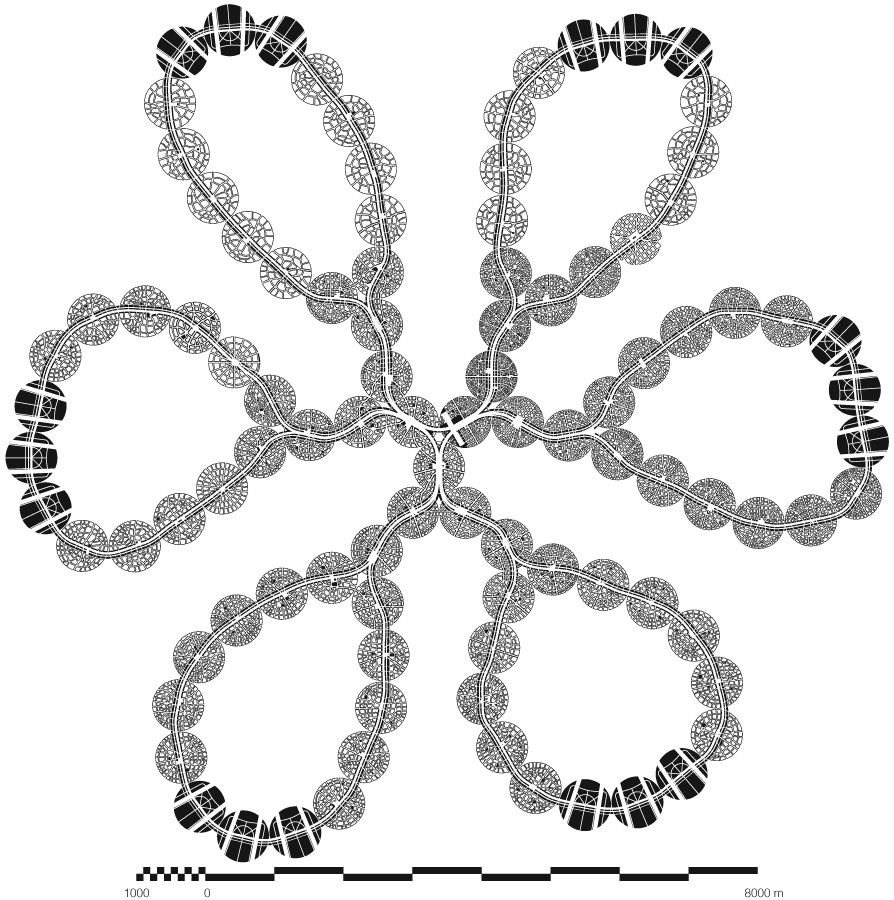
   Reference Design for a six-lobe city (click to open zoom)  1999 J.Crawford The Design Standards for carfree cities as established in the Introduction can be achieved in a city that offers an excellent quality of life. Considerable thought has been given to the arrangement of a city which best fulfills the design standards. The resulting Reference Design described below (and on the Districts and Blocks pages) is for a city of about one million people, but the design can be adapted to cities with populations between about 300,000 and 3,000,000. Design AttributesThe following table sums up the most important design attributes of the reference design.
The Attributes ExplainedSome of the design attributes require further explanation.100 DistrictsAbout 100 districts would be constructed, each roughly 760 meters (2500 feet) in diameter, with streets radiating from the central transport halt. The districts are arranged in a six-leaf-clover pattern. Of the 100 districts, the 18 districts farthest from the city center are "utility areas." These non-residential areas are reserved for various infrastructure requirements, heavy industry, and parking.Six Lobes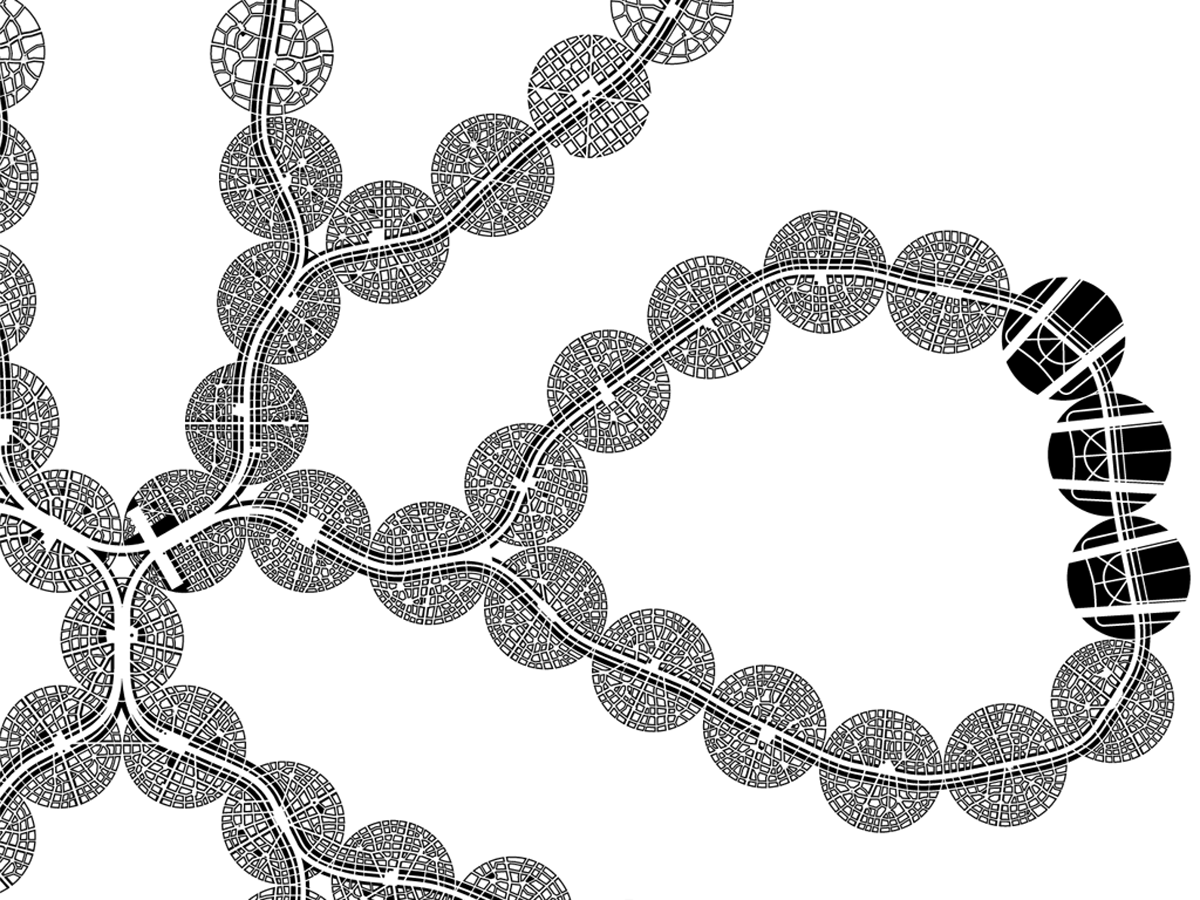 One of the six lobes 1999 J.Crawford
The districts are arranged into six lobes. This arrangement has several advantages:
20% UrbanizedIn order to provide plenty of open space, only 20% of the area of the full site would be developed. Green space would comprise the remaining 80% of the site. However, in cases where land is at a premium, it is possible to increase the density to the point where the districts all touch, leaving only small green areas between.35 Minutes to AnywhereThe worst-case transit time between any two points in the city is about 35 minutes. This arises when the origin of the trip is at the outside edge of one of the utility areas and the destination is also at the outside edge of a utility area located on a different metro line.Adjustments for SizeThe number of districts could be easily adjusted to suit the desired size of the city. Fewer than about 50 districts indicates either that the topology could be simplified or that the density could be reduced. More than about 200 districts begins to lengthen the transit time excessively, yielding worst-case transit times approaching 50 minutes. This provides room for about 2,000,000 inhabitants.Up to around 3,000,000 people, the length of the lobes could be increased still farther, but maximum transit times rise to about one hour, which I regard as the extreme limit of acceptability. Above this, some other form is required. I would prefer to build several sister cities, each with a million inhabitants, arranged in a rough circle, with the centers of these cities linked by high speed rail. With such an arrangement, worst-case transit time between any two points in the metropolitan area is about 45 minutes. This would accommodate cities up to around 6,000,000.
If each of the sister cities is allowed to grow to 2,000,000 inhabitants, then a city of 12,000,000 is possible, with maximum journey times of a little over an hour. Topologies supporting even larger populations can be imagined. |

Continue on to Districts
Return Home
E-mail
carfree.com
1996-2016 J.Crawford